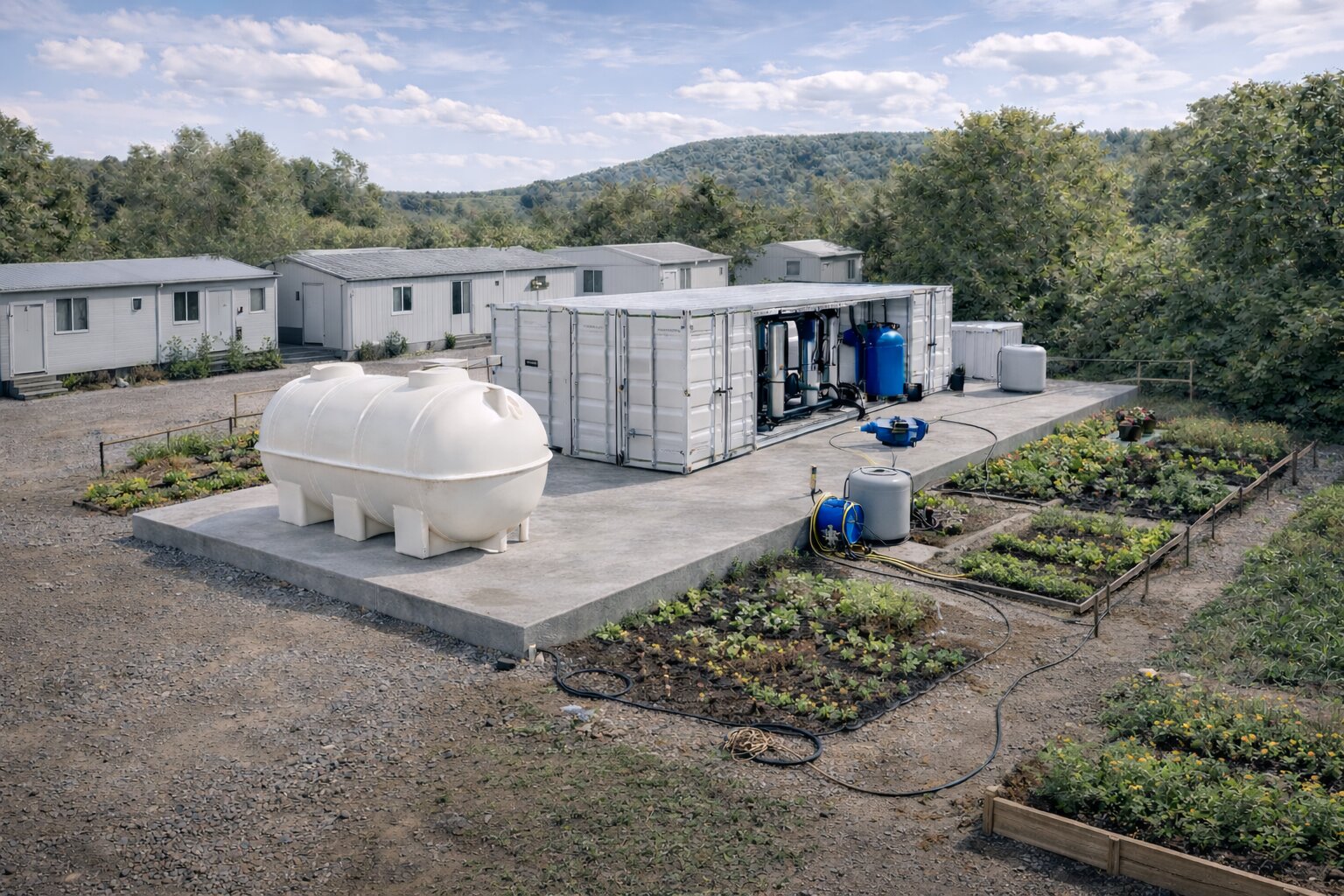
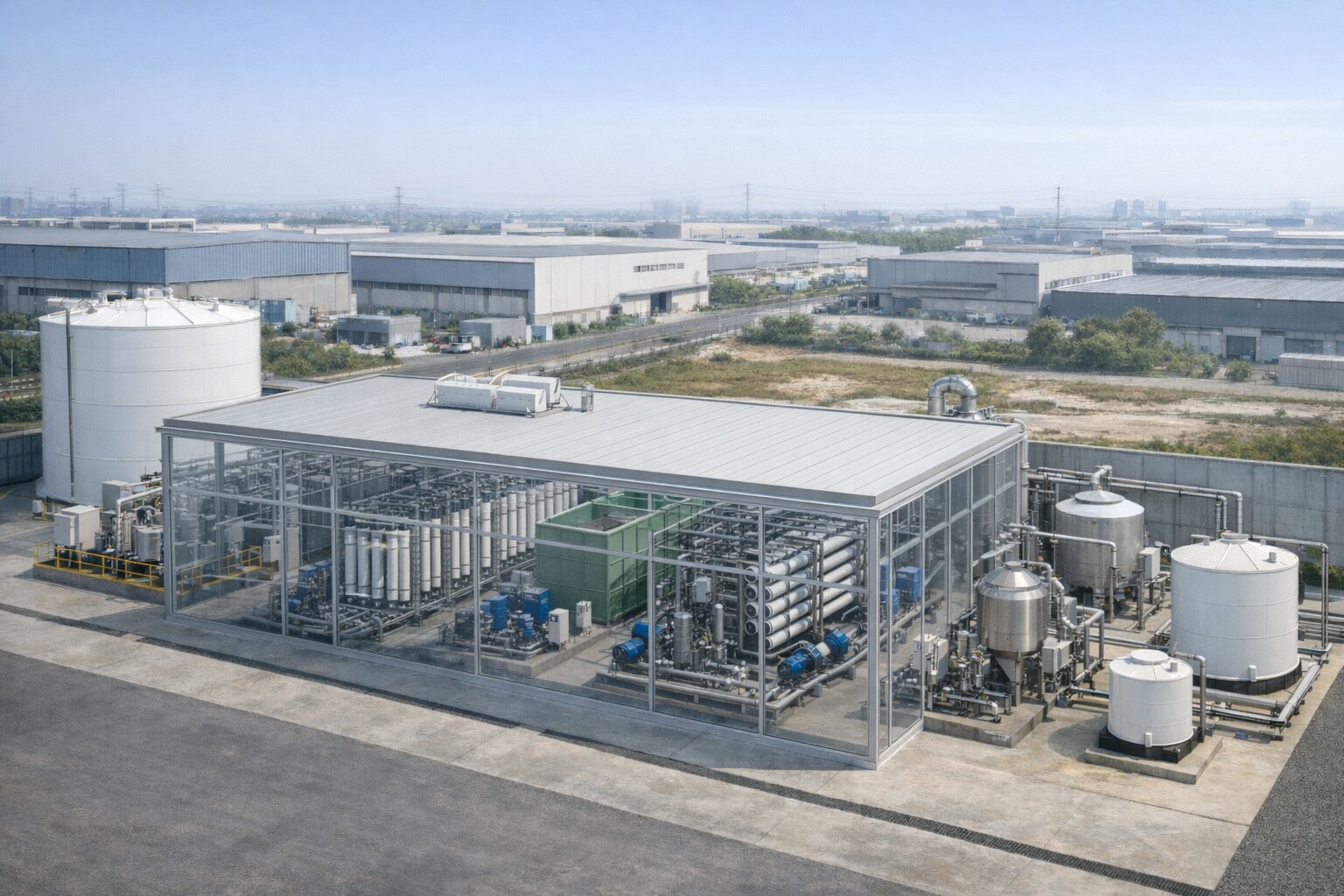
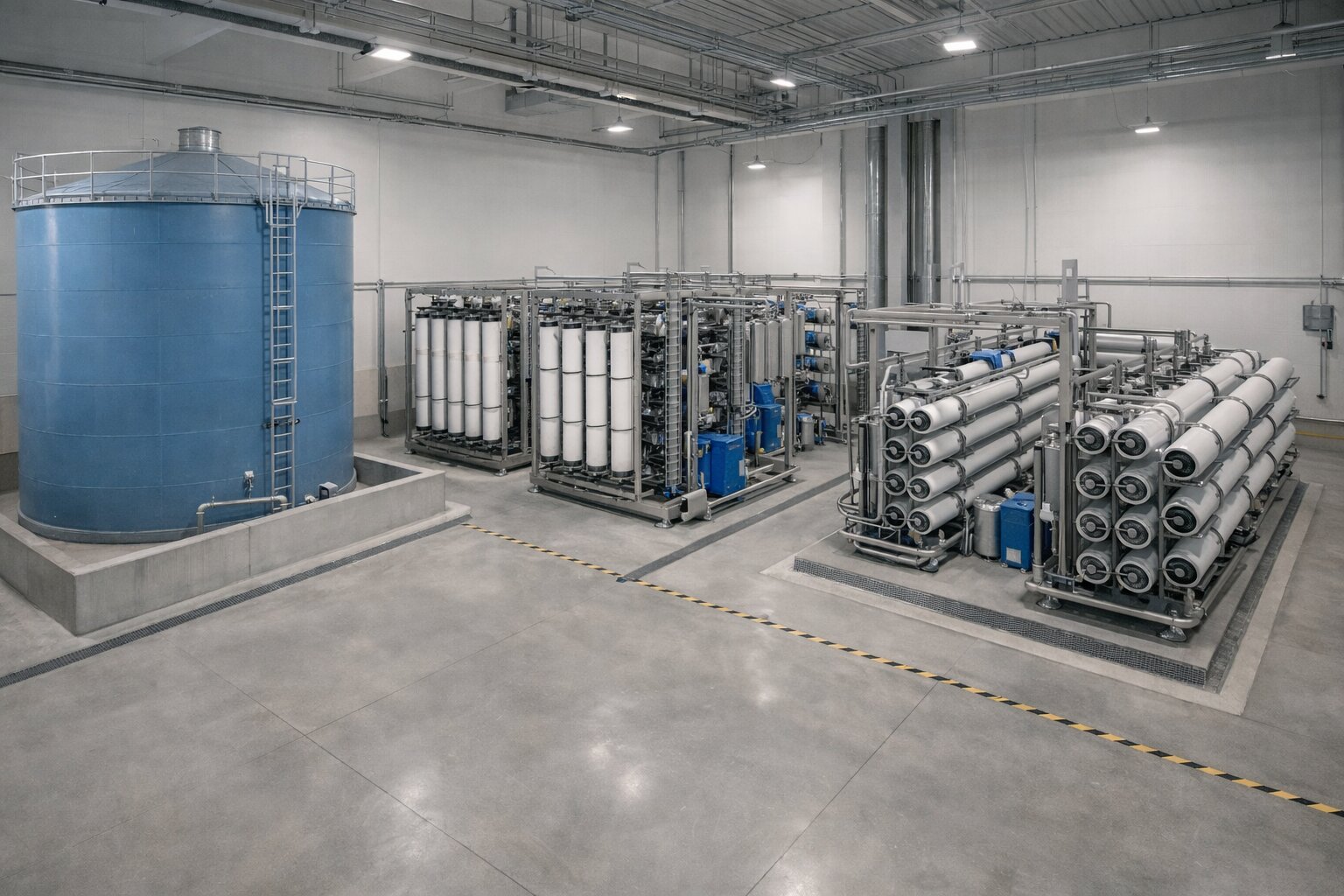
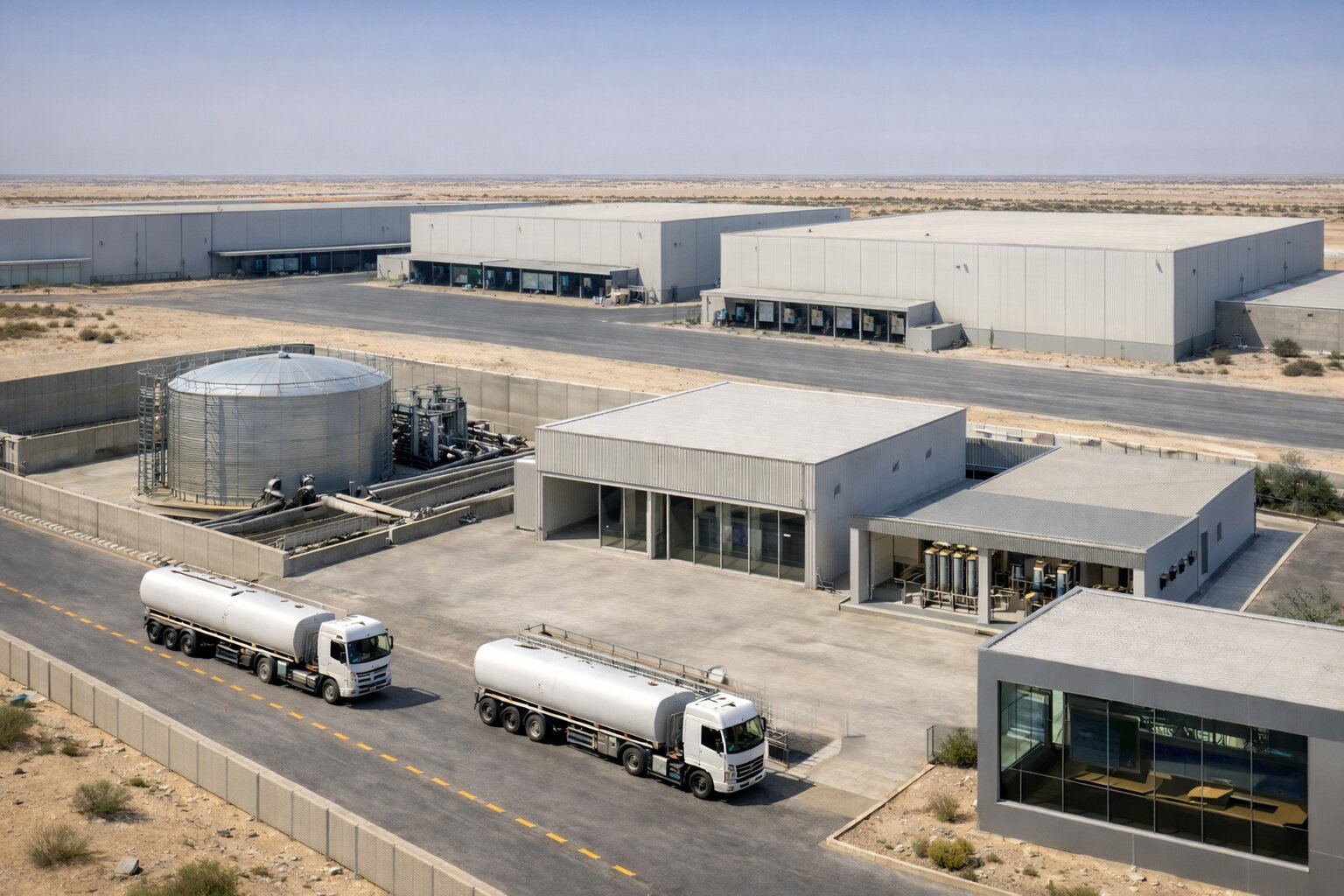
Different assignments require different project bases. A single package is governed by duty, operating range, utilities and connections. A recycling plant also depends on the water balance, contamination profile, storage, return-water quality and residuals.
FlowPlan - Procure | Equipment & utility package
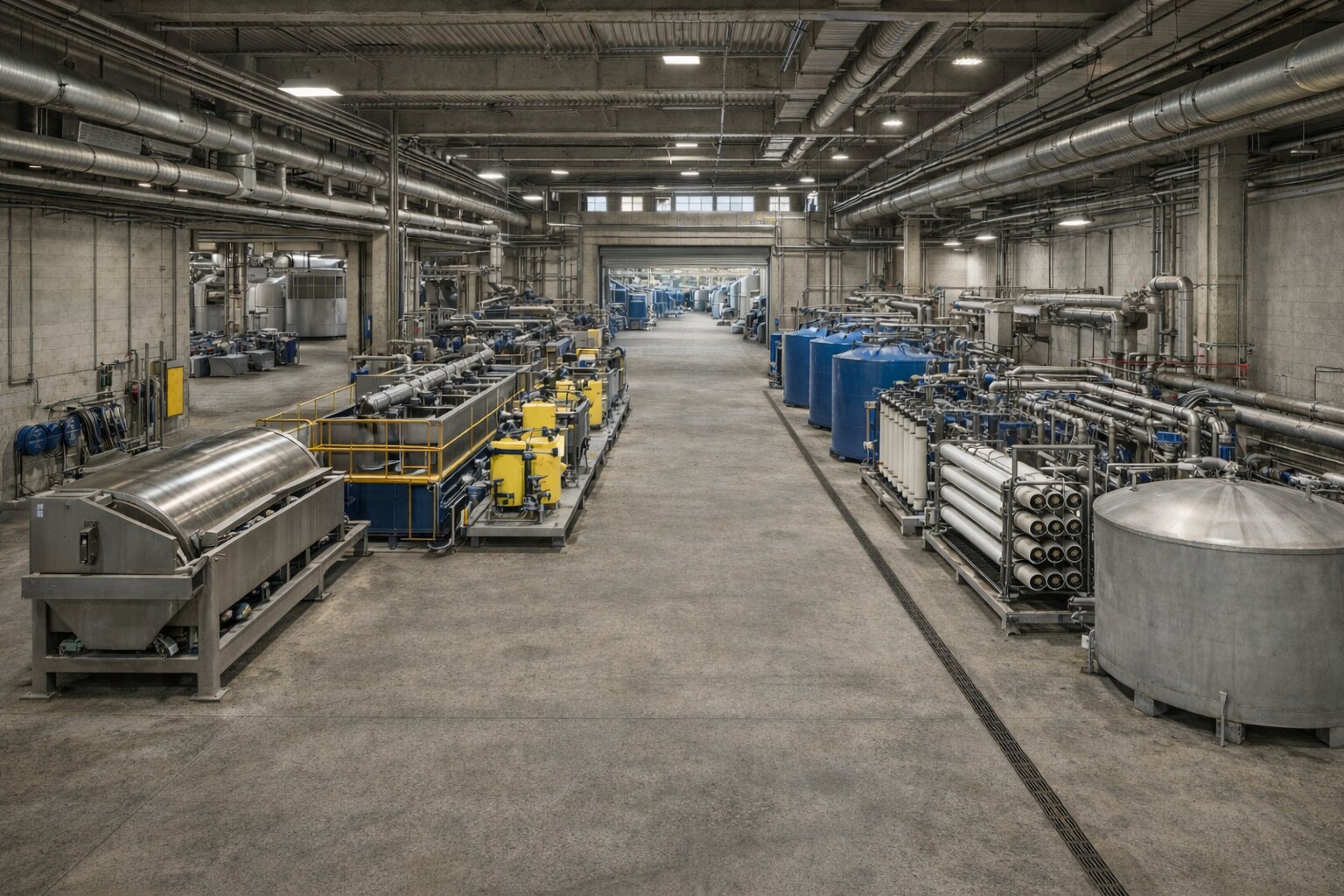
Individual equipment and utility packages require more than a nameplate selection. The package must suit the actual duty and connect to the surrounding system without creating another bottleneck.
Project condition: An existing package is underperforming, unreliable, obsolete or due for replacement. The same route covers a new duty when the available utilities or site arrangements are uncertain.
Project decisions: The required flow, pressure, load and operating range are checked against normal, peak and upset conditions. The review also covers the source of the current shortfall, redundancy, materials, utilities, controls, access and outage limits.
Possible scope: Performance review, hydraulic and process checks, duty and turndown, materials, utility demand, controls and alarms, retained equipment, installation and maintenance requirements, guarantees and acceptance tests.
Project basis: A defined duty and integration basis for comparable selection, installation, commissioning and performance verification, without creating another bottleneck in the surrounding system.
FlowPlan - VWRP | Vehicle Wash Recycling Plant
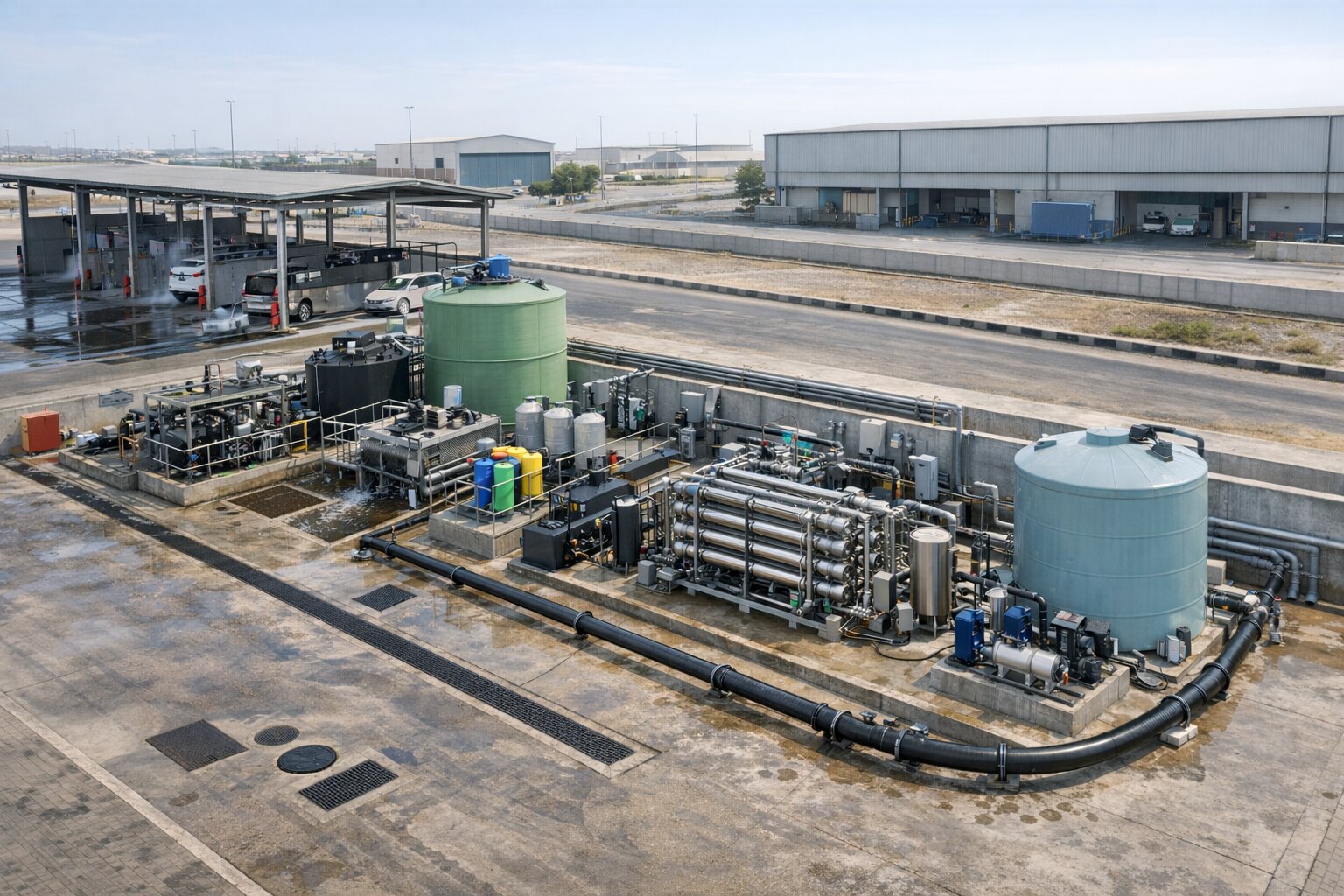
Vehicle wash recycling must account for grit, mud, oils, detergents, variable demand and occasional spills while protecting pumps, nozzles and wash quality.
Project condition: Fresh-water and disposal costs are high, or the existing system suffers from odor, blocked lines, unstable treatment, poor return-water quality, excessive purge or low recovery.
Project decisions: Vehicle type and wash method set the flow and load cases. Grit, oils, chemicals, spill events and storage time determine the treatment, return-water quality, purge and recovery level.
Possible scope: Wash-area drainage review, collection zoning, grit and oil removal, equalization, treatment, odor and sludge control, storage, return pumping, makeup, purge or overflow, utilities, controls and cleaning.
Project basis: A recovery level matched to the operating pattern, with defined return-water quality, spill and upset response, purge and residuals routes, operating cost and performance tests.
FlowPlan - LWRP | Laundry Washwater Recycling Plant
Laundry washwater changes by wash stage. Lint, detergents, heat, color and dissolved salts must be controlled while reused water protects hygiene, textile quality and machine operation.
Project condition: Water and effluent costs justify recovery, or an existing system causes foaming, deposits, odor, inconsistent water quality, high chemical use or unreliable machine performance.
Project decisions: Wash and rinse streams are assessed separately because batch timing, lint, surfactants, temperature, salinity and color do not build up evenly. The return duty determines which streams can be recovered and the justified recovery level.
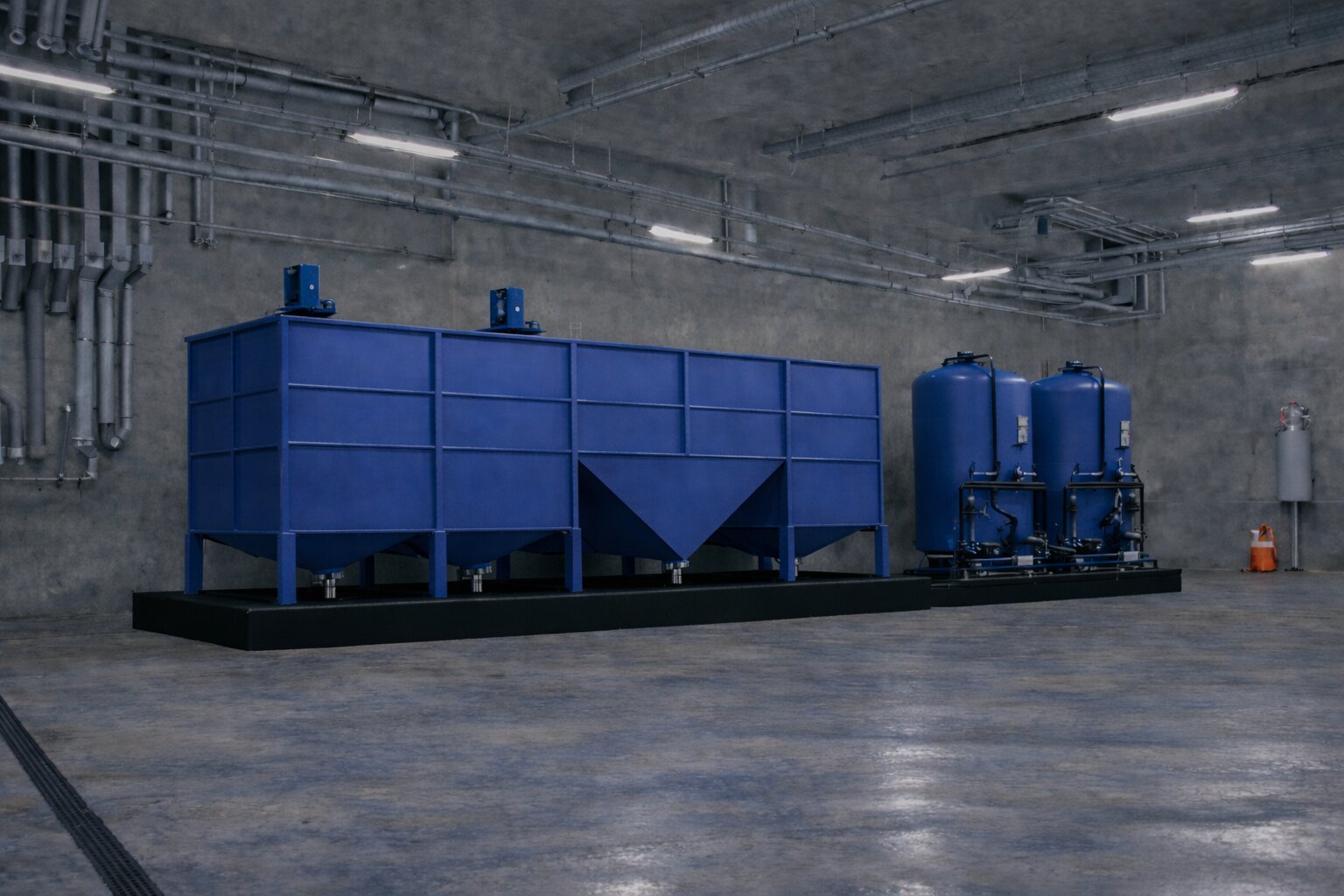
Possible scope: Stream and batch mapping, water and heat balance, screening and lint removal, equalization, treatment and polishing, selective return, storage, backwash or concentrate handling, utilities, hygiene controls and monitoring.
Project basis: A recovery route that identifies the useful streams, return-water quality by duty, justified recovery level, heat and chemical implications, residuals, operating cost and acceptance tests.
FlowPlan - GWTP | Greywater Treatment Plant
Greywater projects must balance variable supply with occupancy and reuse demand. Storage age, organic load, cleaning products and disinfection affect odor, water quality and public-health control.
Project condition: Greywater is available but the source-to-use balance, treatment, storage turnover or operating basis is uncertain, or an existing plant has odor, quality, reliability or demand-matching problems.
Project decisions: Source selection and the water balance determine how much greywater can be recovered and whether demand can absorb it. Treatment, disinfection, storage turnover, off-spec diversion, overflow and cross-connection control define the operating route.
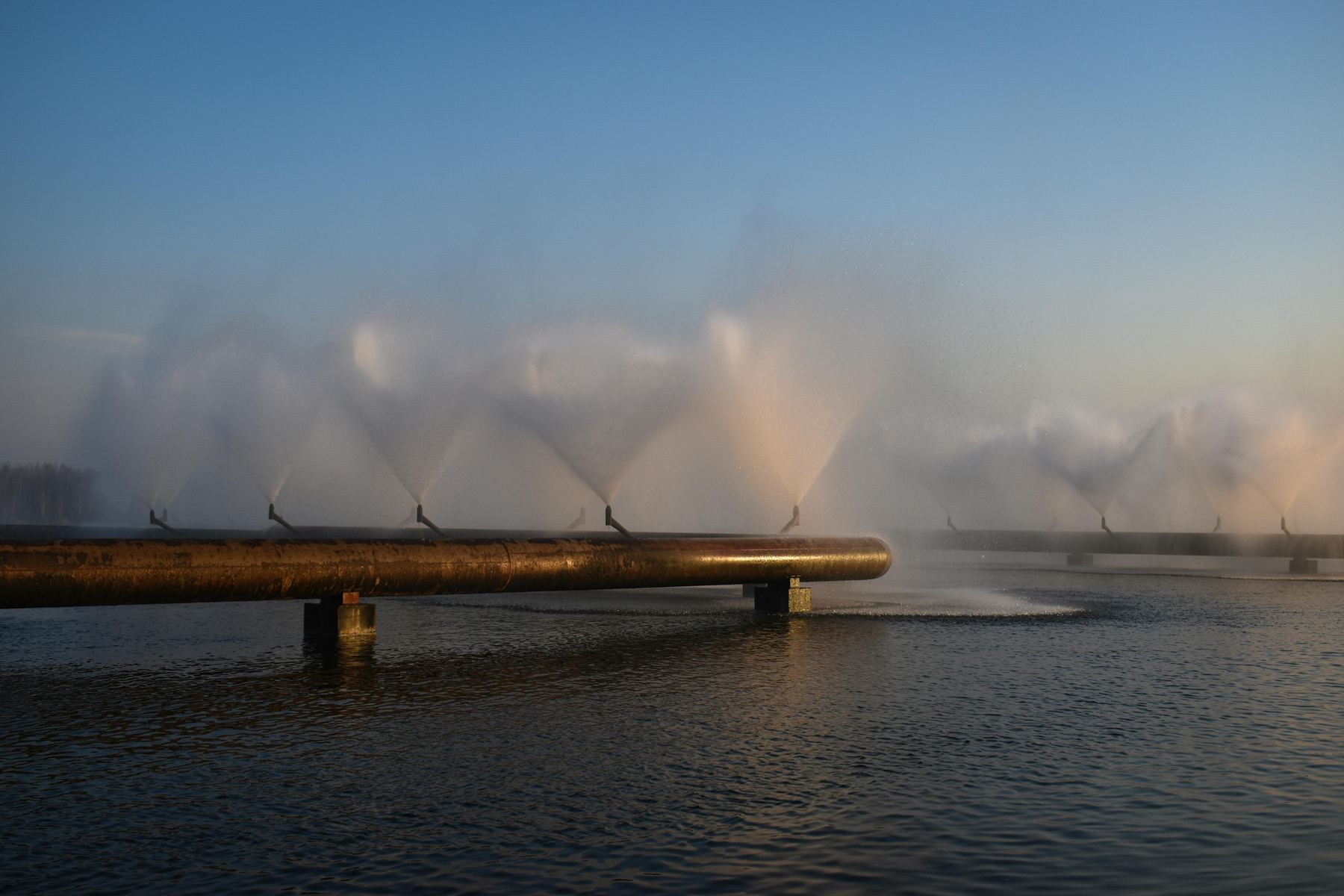
Possible scope: Source and demand balance, collection review, treatment barriers, disinfection, tank turnover, pumping and distribution, monitoring, off-spec diversion, overflow, residuals, utilities and permit information.
Project basis: A recovery basis that matches supply to demand, limits stagnation and odor, protects reuse quality and defines treatment, storage, controls, operating requirements and acceptance testing.