 Review the practical sequence
Delivery sequence
Engagement Roadmap
See how site inputs, technical reviews, supplier engagement, completion checks and follow-up actions are sequenced through the assignment.
Open engagement roadmap
FlowPlan › Planning & Delivery
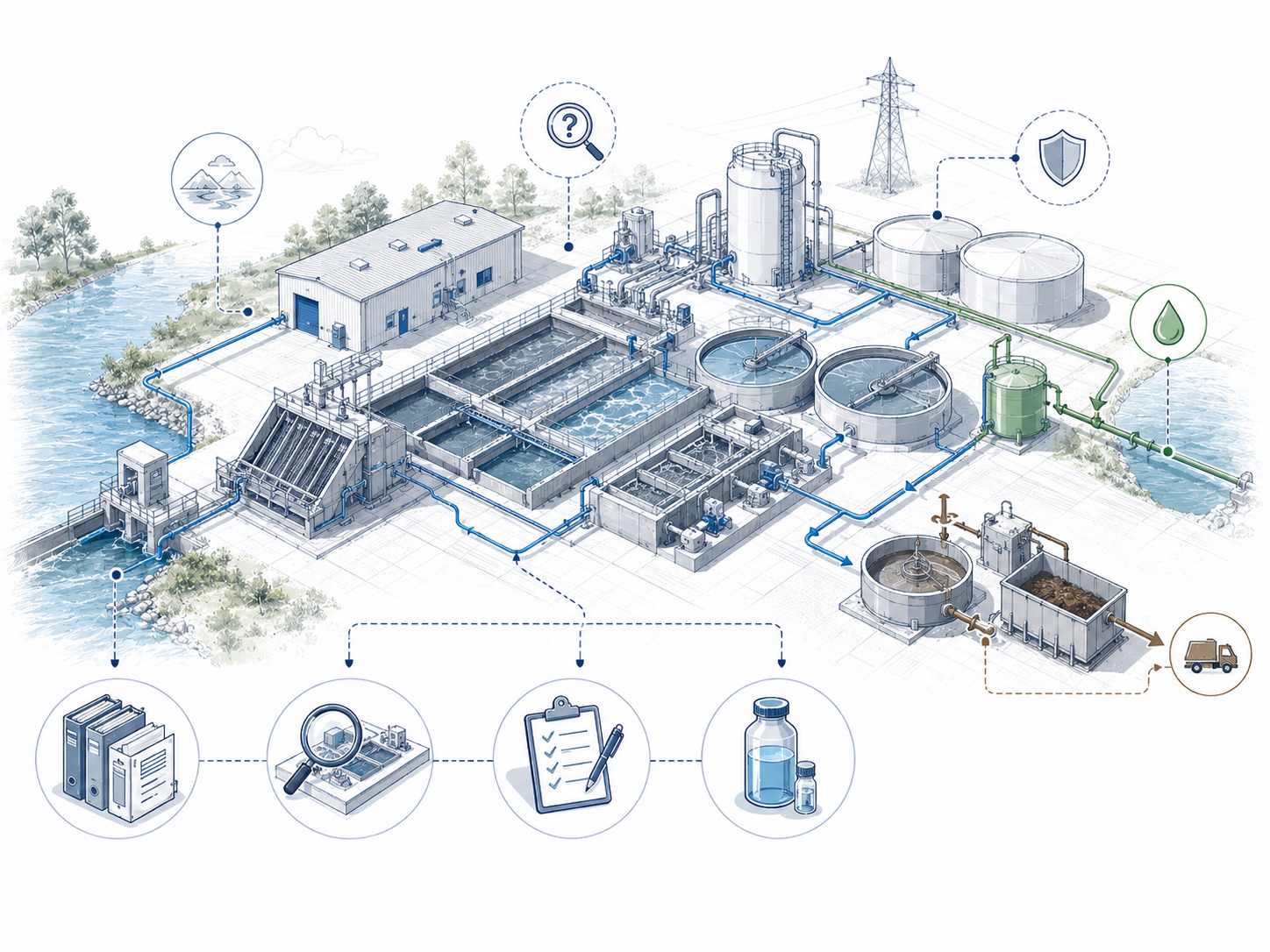
Planning & Delivery shows how FlowPlan is applied in practice, from site intake and sampling through diagnostics, pathway selection, process configuration, specification, commissioning and performance review. The emphasis is on the work needed to move a defined water, wastewater, reuse or residuals project forward.
The sequence follows the practical work from field and operating information to technical decisions, configured treatment stages, supplier-ready requirements and verified performance. Support can begin at the phase matching the current project stage rather than requiring every phase to be repeated.
These four service streams show how FlowPlan work is applied to the actual project, using site and operating information to support technical decisions, supplier requirements, commissioning and early performance review. The six-phase sequence below shows the practical progression where a complete planning-to-delivery route is required.

Where a project needs the complete planning-to-delivery route, the work can be organised through six practical phases, from site intake to performance review.
Each phase represents work carried out on the project, with defined outputs, supplier coordination points and performance checks.
An engagement may begin at the phase matching the current stage, or follow the full sequence for a new project or complex upgrade.
 Intake & Problem Definition
Site conditions, process flows, reuse goals, constraints and decision boundaries are confirmed through available records, operator input, site review and sampling where needed.
Deliverable: A site-informed problem definition with confirmed flows, constraints, information gaps and decision boundaries, ready for diagnostic and feasibility work.
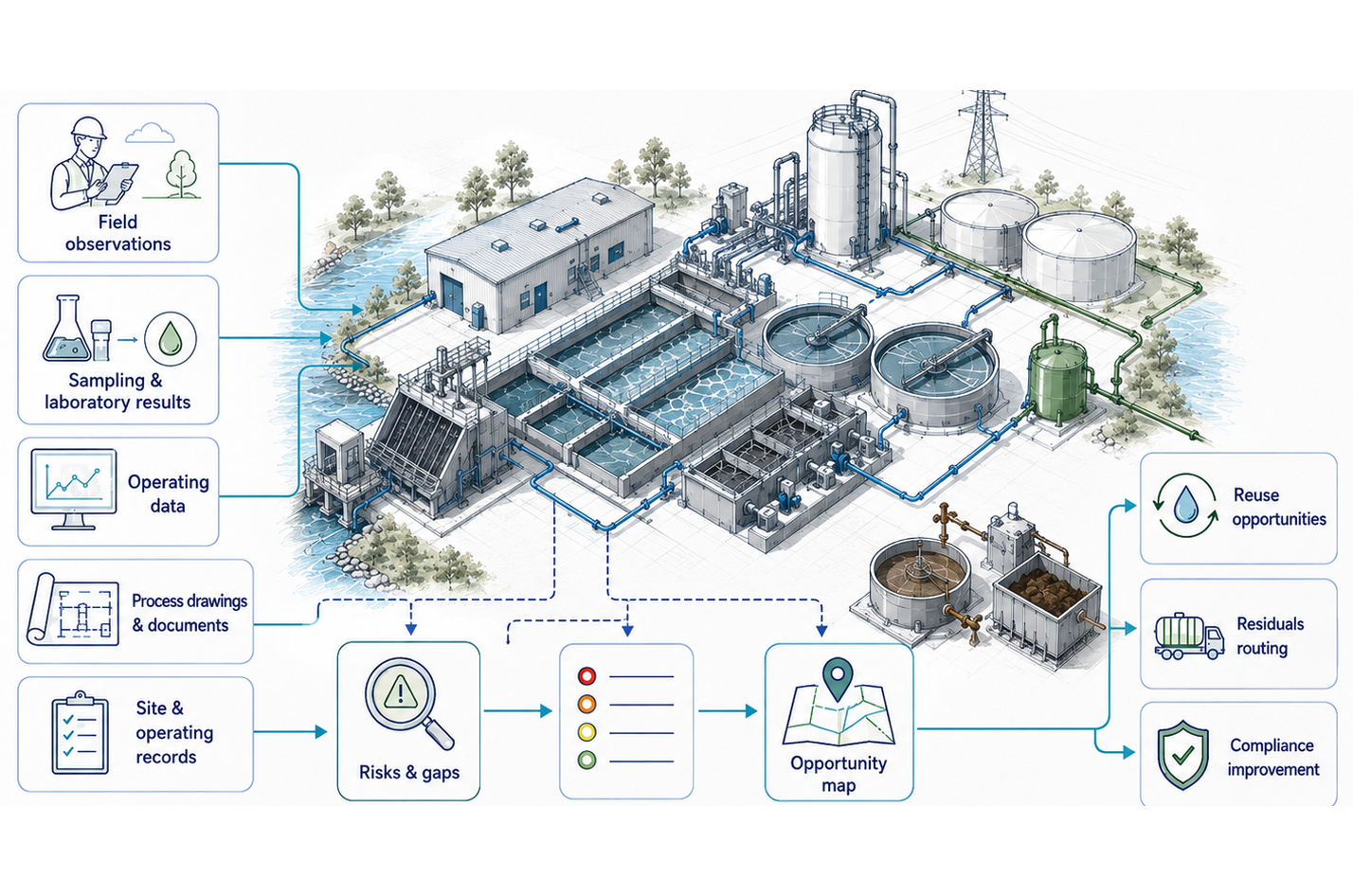
 Diagnostic Mapping & Opportunity Identification
Field observations, sampling results, operating data and drawings are reviewed together to identify risks, information gaps and opportunities for reuse, residuals routing and compliance.
Deliverable: A diagnostic map of site-specific risks, data gaps and opportunities, linked to the FlowPlan responses and further checks needed.
 Feasibility & Pathway Selection
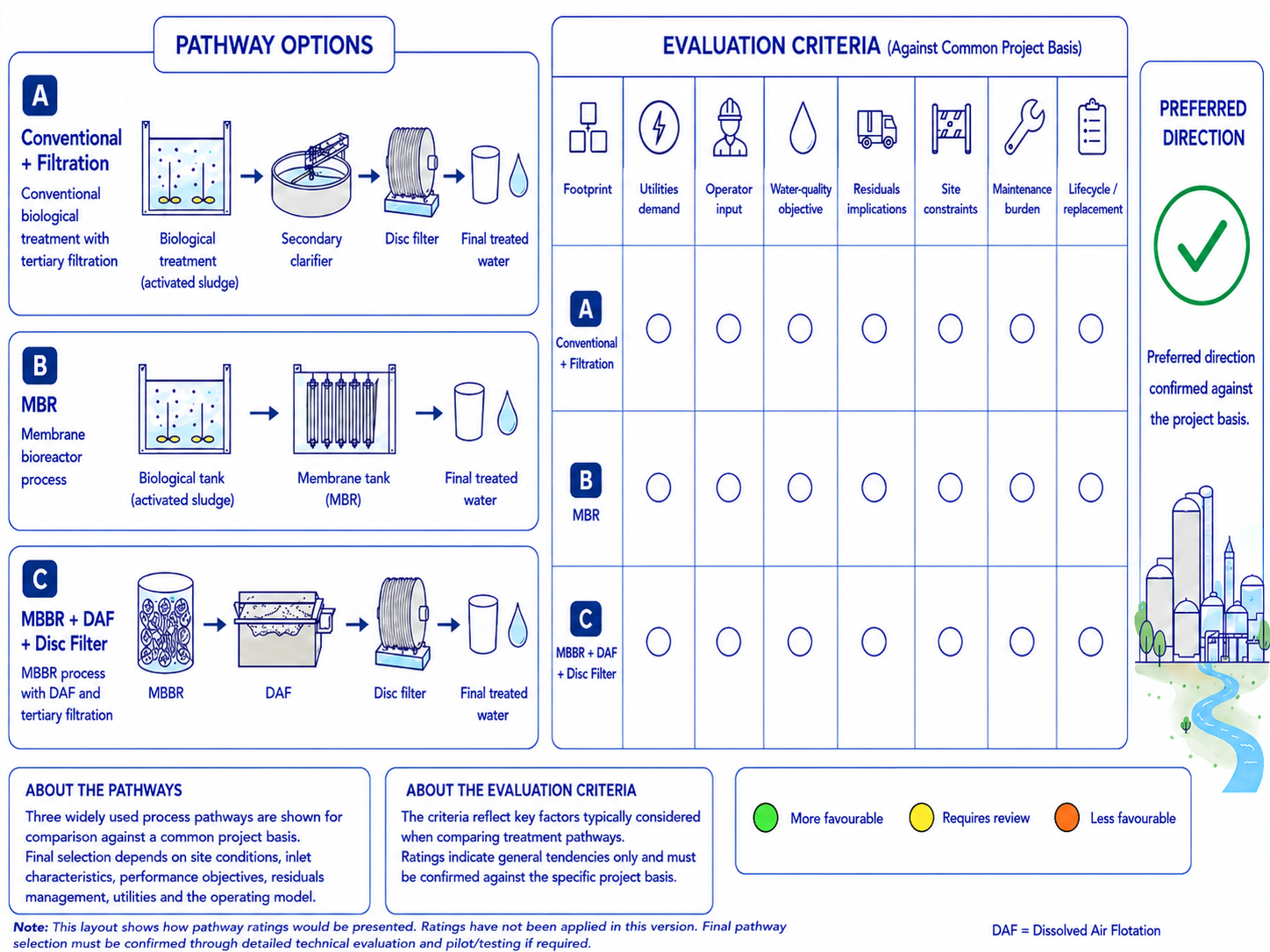
Options are compared against the actual flows, footprint, utilities, operator demands, economics and implementation constraints before commitment.
Deliverable: A technically justified pathway comparison with visible trade-offs and a clear basis for the preferred direction.
 FlowPlan Configuration
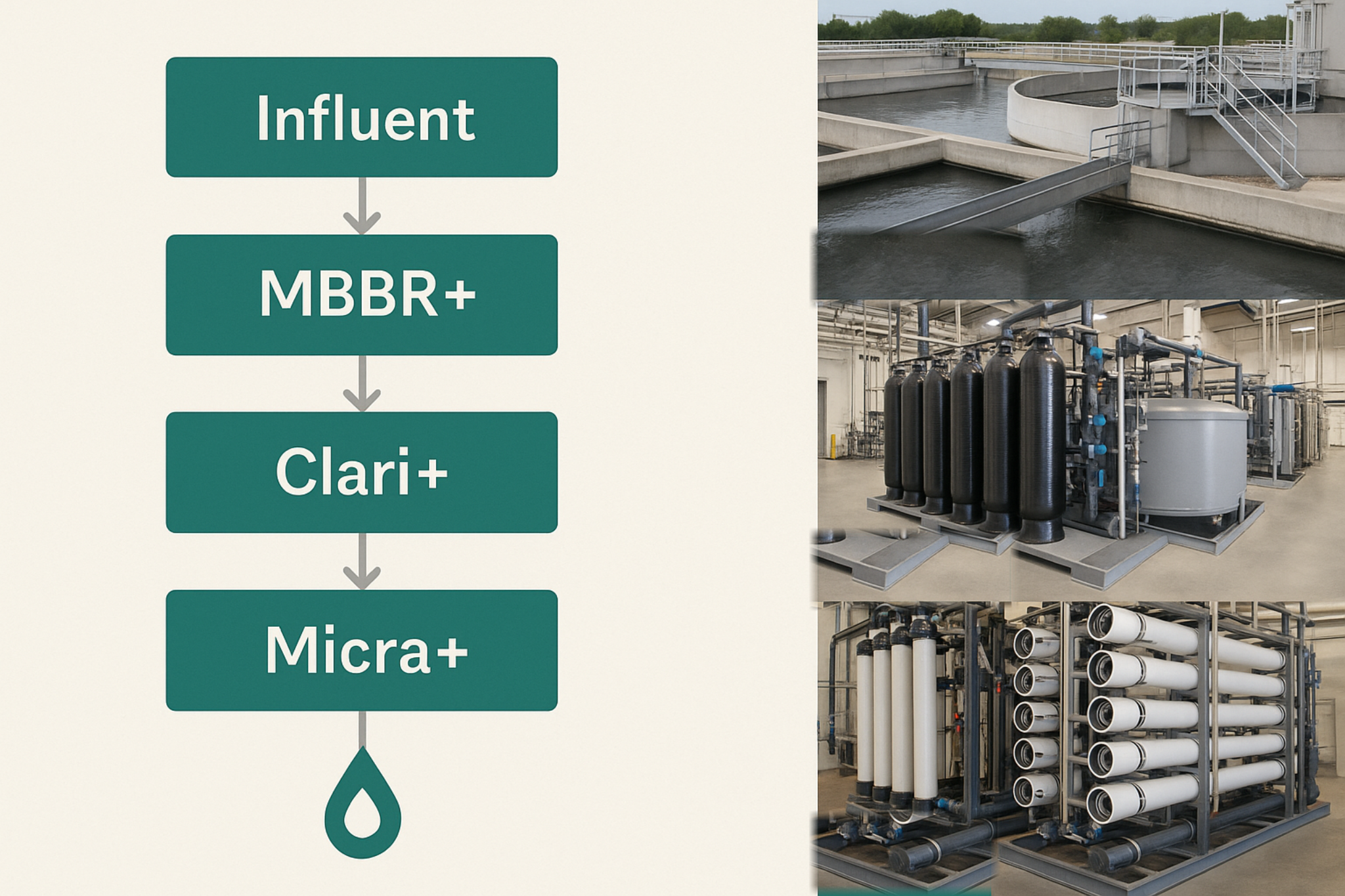
Selected treatment stages are configured around the actual flows, loads, site space, utilities, controls and operating requirements, then connected as one process system.
Deliverable: A configured FlowPlan process basis with defined duties, sequence, connections and dependencies across water, residuals, odor and energy.
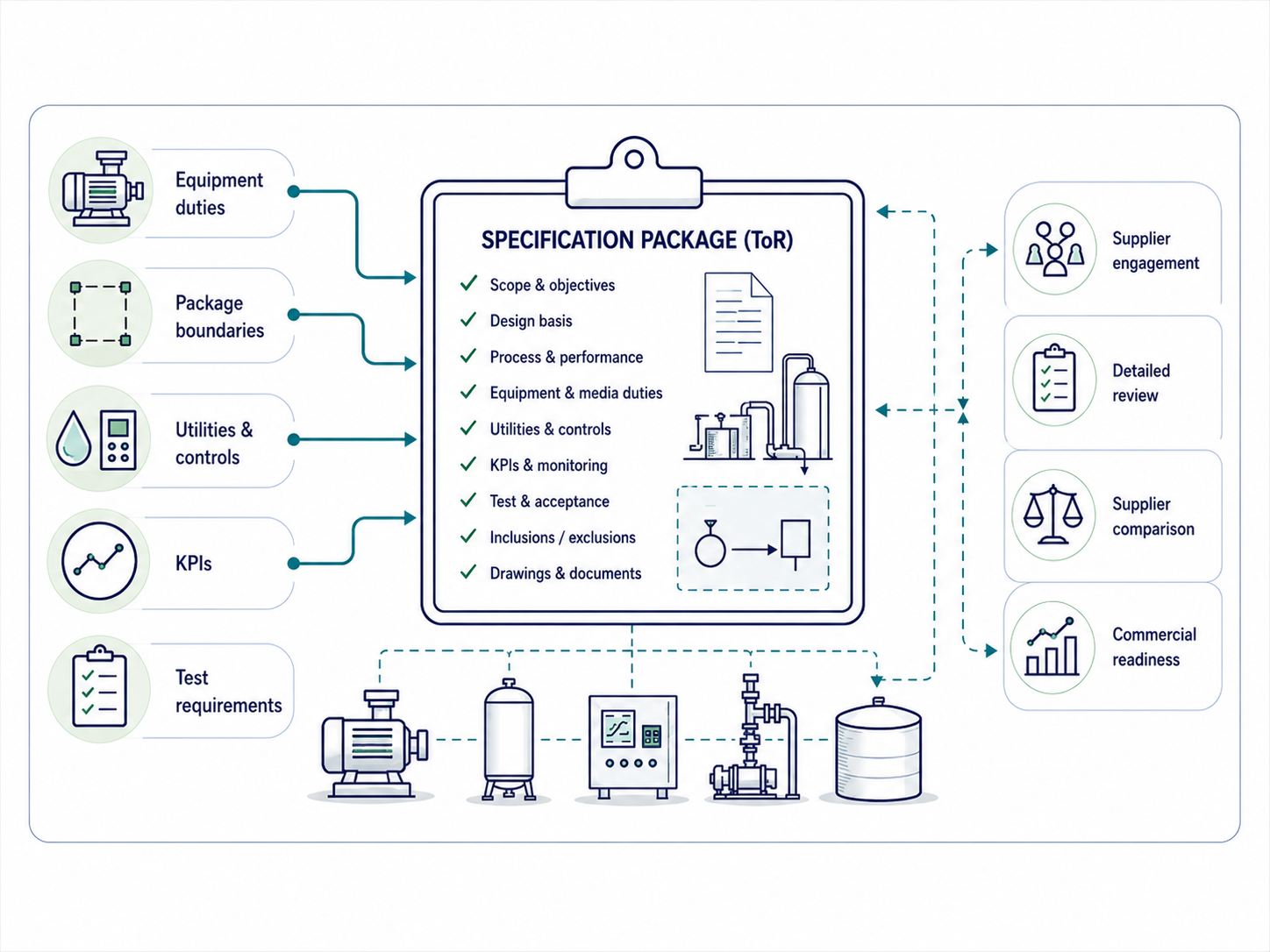
 Specification & Readiness
Equipment and media duties, package boundaries, utilities, controls, KPIs, exclusions and test requirements are defined before supplier engagement.
Deliverable: A Terms of Reference and scope package providing a common technical basis for supplier comparison, detailed review and delivery.
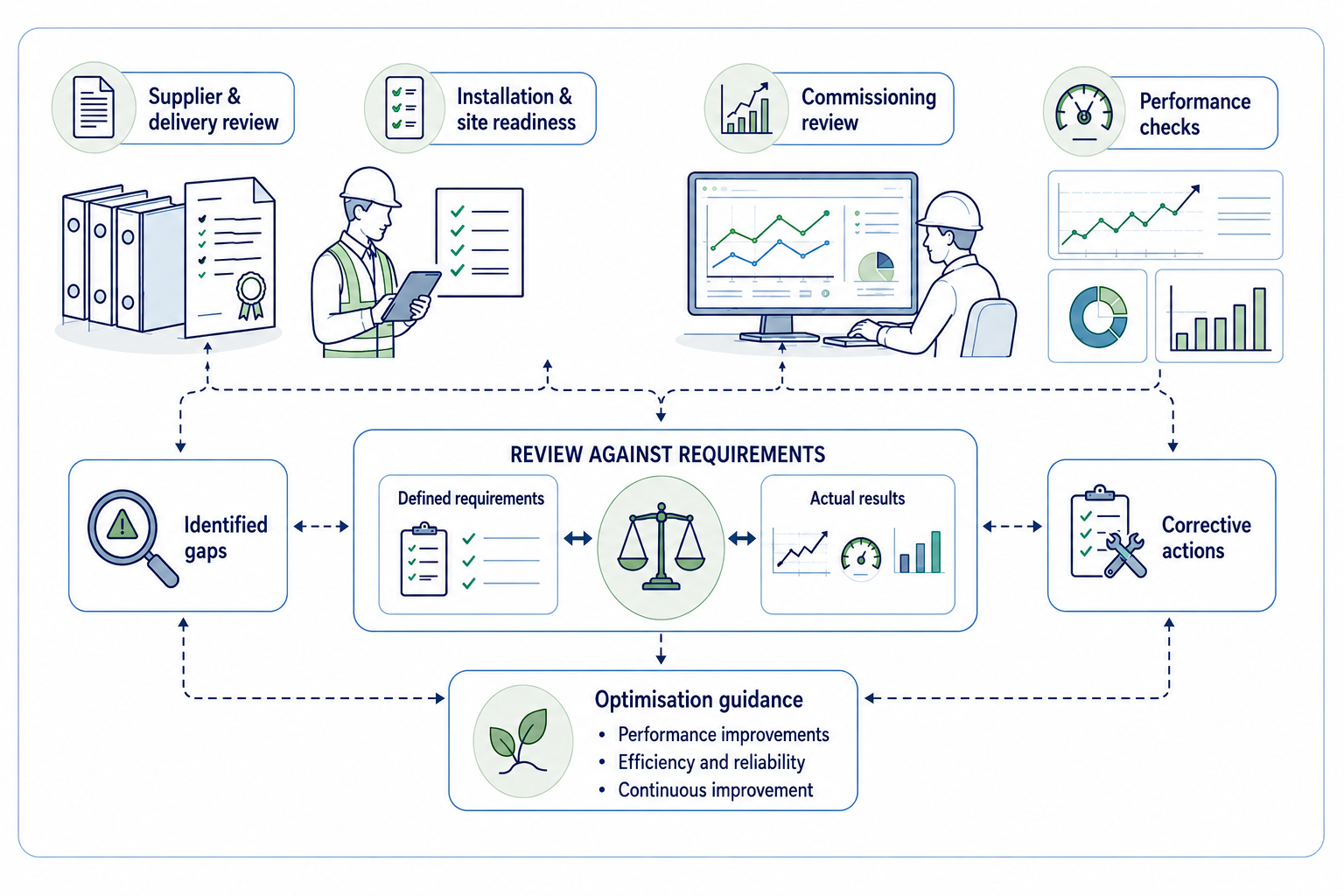
 Implementation & Coordination
Supplier submissions, site readiness, commissioning results and operating data are reviewed against the defined requirements and acceptance criteria.
Deliverable: A documented commissioning and performance review with identified gaps, corrective actions and a clear basis for optimisation.
An engagement can begin at the phase matching the current project stage, whether the immediate need is site intake, diagnostics, pathway selection, process configuration, specification or delivery review.
Select the phase closest to your current stage. If you are unsure where to begin, select General and we will identify the right starting point.